

Metin2 Server Launch Checklist: How to Get Players From Day One
A practical 2026 launch checklist for Metin2 server owners: positioning, trust signals, voting, listings, Discord, and first-week retention.
Quick Steps
- 1Define your server promise
- 2Prepare trust signals
- 3Submit the server listing
- 4Connect vote rewards
- 5Run launch week actively
Why most Metin2 server launches struggle

A Metin2 server launch rarely fails because the team forgot one feature. It usually fails because players cannot understand the promise fast enough, do not trust the project yet, or never see the server in the places where they compare new options. In 2026, a new private server competes against established communities, seasonal relaunches, Discord hype cycles, and dozens of similar websites claiming to be the next big project.
That makes launch preparation more important than raw feature volume. Before you ask players to download a client, your listing, website, Discord, screenshots, rules, opening date, rates, and reward structure should all tell the same story. A player browsing new Metin2 servers should immediately know whether your server is oldschool, newschool, PvP, PvM, long-term, seasonal, international, or country-focused. If that answer is unclear, players bounce before they ever join your Discord.
Define one clear server promise before you advertise
Your launch message should be narrow enough that the right players recognize themselves in it. "Balanced, active, unique, no pay-to-win" is not a promise because every server says it. A stronger promise sounds like: "a low-rate oldschool server for long-term farmers," "a fast PvP server with fair gear access," or "a middleschool server with classic progression and modern quality-of-life systems." That clarity helps players decide quickly and helps ranking pages categorize you correctly.
Start by choosing the primary audience. If the core is nostalgia and slow progression, study how players browse oldschool Metin2 servers. If the core is custom content and speed, position against newschool servers. If the endgame is competitive combat, make the PvP angle obvious and use language that fits PvP server players. If your advantage is farming, dungeons, bosses, and long-term character growth, align the page with PvM server intent. A launch cannot win every audience at once, but it can win the right audience very clearly.
Prepare trust signals players check first
Players are cautious with new Metin2 projects because they have seen servers disappear, wipe too often, exaggerate player counts, or turn aggressive with monetization after launch. Your job is to reduce that fear before the client download. The most useful trust signals are simple: a real website, a clean server description, visible Discord activity, a clear staff presence, changelogs, screenshots from actual gameplay, transparent rules, and a realistic opening plan.
Avoid inflated claims. If the server is new, say it is new. If the project is in beta, explain what is still being tested. If you sell premium items, describe the limits plainly. Players forgive a young project more easily than they forgive a project that feels dishonest. A strong listing on METIN2.GG should include accurate rates, languages, server type, maximum level, opening status, banner, website URL, Discord URL, and a short description that tells players what makes the server worth trying. Trust is not built by one giant paragraph; it is built by consistent signals across every surface.
List your server where players already compare options
Do not wait until launch day to appear in discovery channels. Players who like fresh starts often plan ahead, bookmark opening pages, and compare several launches before choosing where to invest their first weekend. Submit your project early enough that players can see the opening date, follow your Discord, and return when the server goes live.
On METIN2.GG, start with the server submission page. Fill out the fields as if a skeptical player will only give you ten seconds: readable name, correct slug, real website, server type, rates, language coverage, launch timing, and a description that matches the actual gameplay. Then compare your listing with pages like best Metin2 private servers, Metin2 PServer list, and top voted Metin2 servers. The goal is not to copy established servers; it is to understand what information players expect before they click.
Build a voting loop without annoying players
Voting works best when it feels like a fair community habit, not a desperate pop-up campaign. A healthy vote loop gives players a reason to support the server regularly, keeps rewards useful but not economy-breaking, and explains the process clearly. If vote rewards are too weak, players ignore them. If they are too strong, players feel forced to vote or believe the economy is manipulated. The middle ground is where long-term growth lives.
Use the Vote Rewards API to connect votes to in-game rewards safely. Good rewards are practical, time-limited, and broadly useful: experience boosts, convenience items, cosmetic tokens, low-impact consumables, or event currency. Avoid giving direct endgame dominance through votes. Also avoid spammy Discord reminders. One clear reminder near reset time, a short explanation in the starter guide, and a visible rewards page are usually enough. If players understand that votes help the server climb rankings and bring in new guilds, the loop becomes community-driven instead of purely transactional.
Plan launch week like a retention campaign
The first week is not just about peak online count. It is the moment players decide whether your server deserves a second login. Plan it like a retention campaign: stable launch window, clear patch communication, visible staff coverage, starter events, fast bug triage, economy monitoring, and honest updates when something breaks. Silence is often more damaging than the bug itself.
Prepare a simple day-by-day schedule before opening. Day one should focus on stability, account creation, download support, queue or login issues, and early progression friction. Days two and three should support dungeon access, guild formation, market health, and first PvP encounters. By the weekend, players should see events that reinforce the server identity: boss races for PvM communities, arena events for PvP servers, farming contests for oldschool projects, or launch milestones for newschool projects. A server that feels actively managed in week one earns more trust than a server that only advertises before launch.
Measure the signals that actually predict growth
Raw online count matters, but it is not the only signal. Track the full launch funnel: listing views, website clicks, Discord joins, account registrations, client downloads, first-login success, day-two retention, vote activity, bug reports, and negative feedback themes. If many players click your listing but few join Discord, the website or description may be weak. If many join Discord but few download the client, setup friction may be high. If many log in once and never return, early progression or trust may be the problem.
Use ranking performance as a feedback loop too. Read how METIN2.GG ranks servers and treat vote count, listing quality, and player engagement as part of the same system. The best server teams do not guess for weeks; they review signals daily during launch, make small improvements quickly, and communicate what changed. That rhythm turns a launch from a one-time marketing push into a compounding discovery engine.
Quick launch checklist for server owners
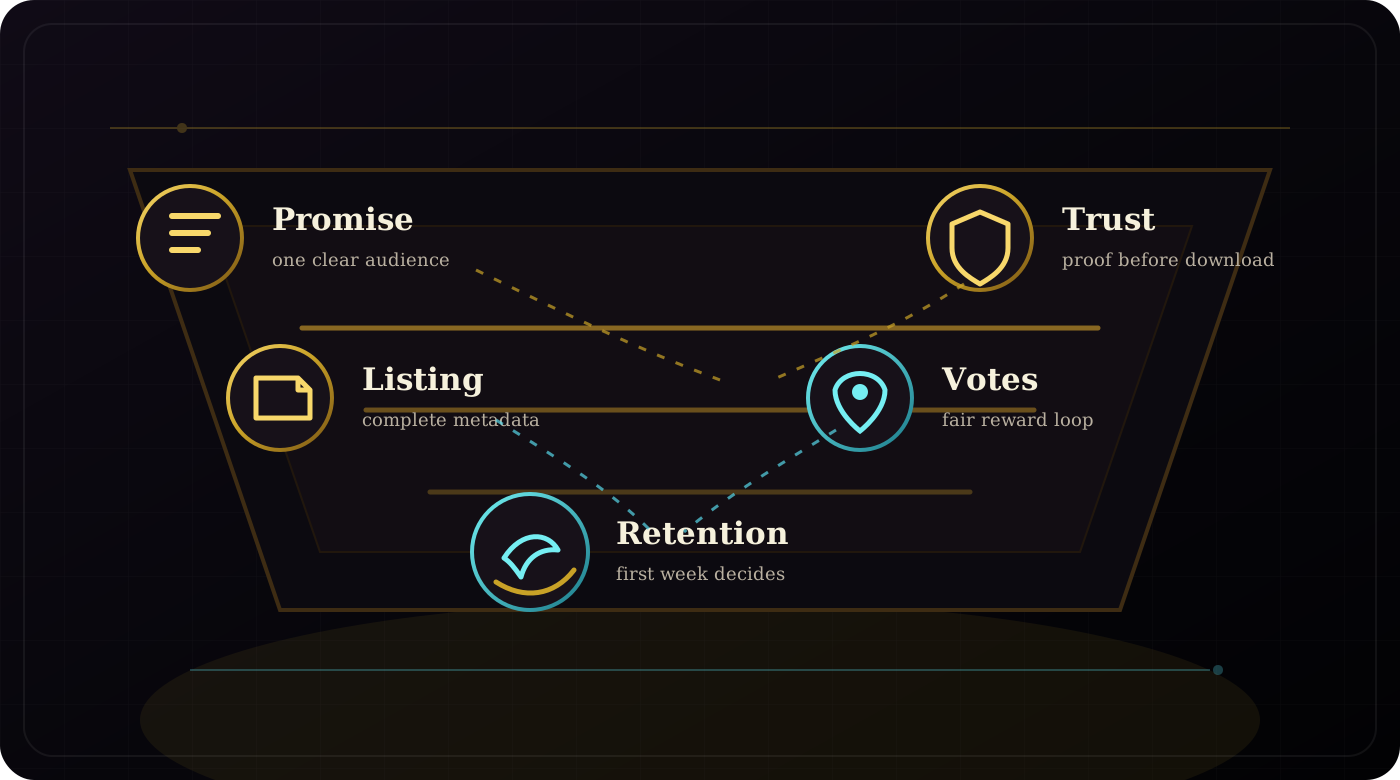
Use this checklist before announcing a public launch date. It is intentionally practical: every item either increases trust, improves discovery, or reduces friction for the first wave of players.
- Positioning: Define the main audience, server type, progression speed, and strongest reason to play.
- Listing: Submit the server with accurate rates, type, language, website, Discord, banner, opening date, and description.
- Trust: Publish rules, staff roles, changelog, screenshots, download instructions, and monetization limits.
- Discord: Create channels for announcements, support, bug reports, guides, guild recruitment, and vote reminders.
- Vote rewards: Connect voting to useful but non-breaking rewards through a transparent system.
- Launch operations: Schedule staff coverage, prepare rollback criteria, monitor login issues, and announce fixes fast.
- Retention: Plan first-week events, starter help, economy monitoring, and daily communication.
- Measurement: Review clicks, joins, votes, retention, and feedback themes every day during launch week.
If you complete these items before opening, your server enters the market with a clear promise, discoverable listing, safer first impression, and a better chance of converting early curiosity into an active player base.
Frequently Asked Questions
How early should I submit my Metin2 server before launch?
What vote rewards should a new Metin2 server give?
Should a new server launch as Oldschool, Newschool, PvP, or PvM?
How do I make a new Metin2 server look trustworthy?
Can paid ads replace toplist votes and organic discovery?
Related Pages
Find Your Perfect Server
Browse the top-ranked Metin2 private servers on METIN2.GG or submit your own server to the rankings.